
Manual Sweeper Brooms: A Comprehensive Guide
Manual sweeper brooms are essential cleaning tools, offering a simple yet effective way to maintain various surfaces, from homes to industrial spaces, ensuring cleanliness.
What is a Manual Sweeper Broom?
A manual sweeper broom is a handheld cleaning tool designed for sweeping debris from floors and surfaces without the aid of electricity. It fundamentally consists of bristles attached to a handle, allowing users to physically push and gather dirt, dust, and other unwanted particles. Unlike powered sweepers, it relies entirely on human effort for operation.
These brooms have been a staple in cleaning routines for centuries, evolving from simple bundles of twigs to more sophisticated designs incorporating synthetic materials. Their primary function remains consistent: to dislodge and collect loose debris, preparing surfaces for further cleaning or simply maintaining tidiness.
The effectiveness of a manual sweeper broom hinges on the quality of its bristles, the ergonomic design of its handle, and the overall construction. They are versatile tools suitable for both indoor and outdoor applications, though specific types are better suited for certain surfaces and tasks.
History and Evolution of Sweeper Brooms
The history of the sweeper broom stretches back centuries, originating with simple bundles of twigs tied together for basic cleaning. Early iterations utilized natural materials readily available in local environments. Over time, these evolved into more structured designs, with the introduction of straw and later, corn husks, becoming common materials for broom-making.
The 19th century saw significant advancements, particularly with the Shaker communities in the United States, renowned for their flat brooms – a design that greatly improved sweeping efficiency. The 20th century brought the revolutionary shift to synthetic materials like nylon and polypropylene, offering increased durability and cleaning performance.
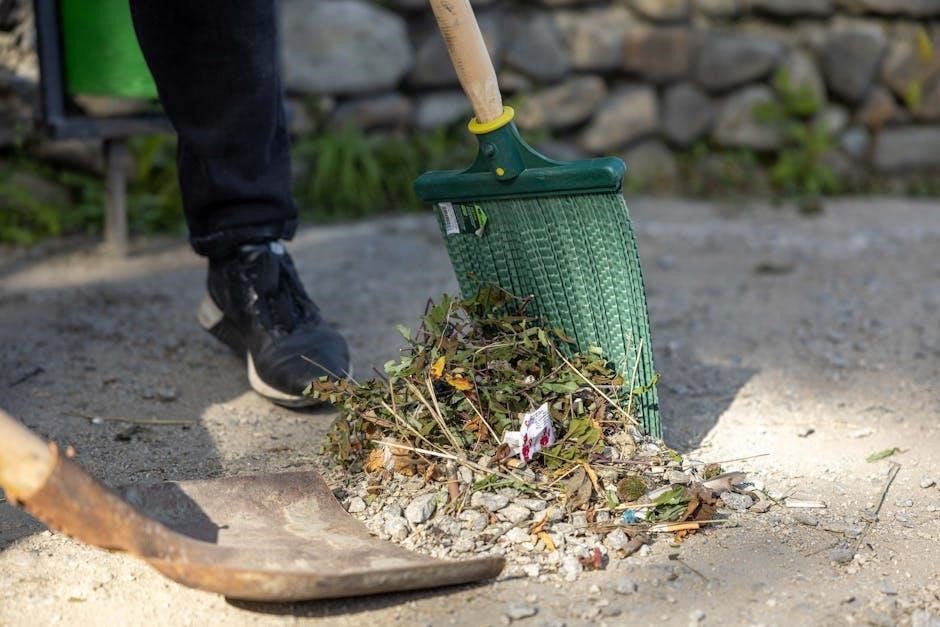
Today, manual sweepers continue to evolve, with ergonomic handle designs and specialized bristle configurations catering to diverse cleaning needs. While powered sweepers have emerged, the manual broom remains a relevant and reliable cleaning tool, demonstrating its enduring practicality.

Types of Manual Sweeper Brooms
Manual sweeper brooms come in diverse forms, including traditional straw, corn, synthetic bristle (nylon/polypropylene), and heavy-duty wire brooms, each suited for specific tasks.
Traditional Straw Brooms
Traditional straw brooms represent the oldest form of manual sweeping technology, crafted from dried plant stalks – typically sorghum or broomcorn. These brooms have a long and storied history, predating modern synthetic materials by centuries. Their construction involves bundling the straw tightly and securing it to a wooden handle.
The appeal of straw brooms lies in their natural fibers, which offer a unique texture ideal for delicate surfaces like wood floors. They excel at collecting fine dust and debris without causing scratches. However, straw brooms are less durable than their synthetic counterparts and require more frequent replacement.
Furthermore, they aren’t well-suited for wet cleaning or heavy-duty tasks. Despite their limitations, traditional straw brooms remain popular for their eco-friendly nature and nostalgic charm, often favored for maintaining a rustic aesthetic or for specific cleaning needs where gentleness is paramount.
Corn Brooms: Characteristics and Uses
Corn brooms, a specific type of traditional broom, are distinguished by their use of broomcorn – a variety of sorghum cultivated specifically for broom-making. This material provides a stiffer, more durable bristle compared to other straw brooms, making them versatile for both indoor and outdoor use. Characteristically, corn brooms possess a coarser texture, enabling them to tackle heavier debris like leaves, dirt, and small stones.
Historically, corn brooms were widely used for sweeping porches, sidewalks, and barn floors. Their robust bristles effectively clear larger areas and withstand rough surfaces. While not ideal for polished floors due to their abrasive nature, they excel at outdoor cleaning tasks.
Modern corn brooms often feature a mix of broomcorn and synthetic fibers to enhance durability and cleaning performance. They remain a popular choice for those seeking a natural, effective, and relatively inexpensive sweeping solution, blending tradition with practicality.
Synthetic Bristle Brooms: Nylon and Polypropylene
Synthetic bristle brooms, primarily utilizing nylon and polypropylene, represent a significant advancement in manual sweeping technology. These materials offer distinct advantages over traditional natural fibers, notably increased durability and resistance to wear and tear. Nylon bristles are known for their exceptional stiffness and ability to maintain their shape, making them effective for heavy-duty cleaning and scrubbing.
Polypropylene, conversely, is more flexible and cost-effective, ideal for lighter sweeping tasks and delicate surfaces. Synthetic bristles are also non-absorbent, preventing mildew and bacterial growth, and are resistant to chemicals, extending the broom’s lifespan.
These brooms are exceptionally versatile, suitable for both indoor and outdoor applications, and excel at capturing fine dust and debris. Their consistent performance and ease of maintenance have made them a staple in both residential and commercial cleaning environments, offering a practical and hygienic alternative.
Wire Brooms: For Heavy-Duty Cleaning
Wire brooms are specifically engineered for demanding cleaning tasks where robust performance is paramount. Constructed with steel or stainless steel wires, these brooms excel at tackling stubborn debris like gravel, leaves, and industrial waste that traditional bristle brooms simply cannot handle. Their rigid structure provides exceptional scrubbing power, making them ideal for concrete, asphalt, and other rough surfaces.
However, it’s crucial to note that wire brooms are not suitable for delicate flooring like wood or tile, as the wires can cause scratching and damage. They are commonly used in construction sites, garages, and outdoor areas requiring intensive cleaning.
Despite their durability, wire brooms require careful maintenance to prevent rust and corrosion. Regular cleaning and occasional oiling can significantly extend their lifespan, ensuring continued effectiveness in heavy-duty applications. They represent a powerful solution for challenging cleaning scenarios.

Key Components of a Manual Sweeper Broom
Essential parts include bristle material, handle construction, and broom head design; these elements dictate performance, durability, and user comfort during sweeping operations.
Bristle Material and Density
Bristle material significantly impacts a broom’s effectiveness. Traditional options like straw offer a soft touch, ideal for delicate surfaces, but wear quickly. Corn brooms provide a balance of stiffness and flexibility, suitable for various debris types. However, synthetic bristles – nylon and polypropylene – have gained prominence due to their durability and resistance to wear and tear.

Nylon bristles excel at sweeping both wet and dry materials, making them versatile for indoor and outdoor use. Polypropylene is lighter and more cost-effective, often preferred for lighter-duty tasks. Bristle density also plays a crucial role; denser bristles offer more scrubbing power and are better at capturing fine dust, while sparser bristles are more effective at sweeping larger debris. The optimal density depends on the intended application and surface type. Higher density generally equates to a more thorough clean, but may require more effort to push.
Handle Material and Ergonomics
Handle material greatly influences user comfort and broom longevity. Traditionally, wooden handles were standard, offering a natural grip and reasonable durability. However, wood can warp or break with prolonged exposure to moisture. Modern brooms increasingly feature handles made from materials like steel, aluminum, or durable plastics.
Steel handles provide exceptional strength and stability, ideal for heavy-duty use. Aluminum offers a lightweight alternative without sacrificing much strength. Ergonomics are paramount; a well-designed handle should be appropriately sized for the user’s height, reducing strain on the back and shoulders. Features like contoured grips and non-slip coatings enhance comfort and control. Angled handles can also improve sweeping posture, minimizing fatigue during extended cleaning sessions. Considering handle length and grip design is crucial for maximizing efficiency and preventing discomfort.
Broom Head Shape and Size
Broom head shape and size significantly impact cleaning effectiveness and maneuverability. Traditional flat brooms are versatile for general sweeping, covering large areas efficiently. Angled broom heads excel at reaching corners and along edges, providing more precise cleaning. Round brooms are particularly useful for scrubbing and cleaning curved surfaces.
Size varies considerably, ranging from compact brooms for small spaces to wider heads for expansive areas. A wider head sweeps more quickly but can be cumbersome in tight spots. The density and arrangement of bristles also play a role; denser bristles are better for fine dust, while sparser bristles handle larger debris. The overall shape should complement the intended use, ensuring optimal contact with the surface and efficient dirt removal. Selecting the appropriate head shape and size is vital for achieving a thorough and effortless clean.

Choosing the Right Manual Sweeper Broom
Selecting the ideal broom depends on the task, surface, and debris type; consider indoor versus outdoor needs and material compatibility for optimal results.
Indoor vs. Outdoor Use Cases
The distinction between indoor and outdoor broom usage is crucial for effectiveness and longevity. Indoor brooms generally prioritize fine dust and debris removal on delicate surfaces like hardwood, tile, and laminate. These often feature softer bristles – nylon or synthetic blends – to prevent scratching and distribute weight evenly.
Outdoor brooms, conversely, are designed for heavier-duty tasks. They tackle leaves, dirt, gravel, and other robust debris on surfaces like concrete, patios, and sidewalks. Stiffer bristles, such as corn or wire, are common, providing the necessary scrubbing power. Outdoor brooms also tend to have more durable handles and heads to withstand harsher weather conditions and frequent use.
Using an indoor broom outdoors can lead to rapid wear and tear of the softer bristles, while employing an outdoor broom indoors risks damaging sensitive flooring. Therefore, dedicated brooms for each environment are recommended for optimal cleaning performance and tool preservation.
Surface Type Considerations (Wood, Tile, Concrete)
Selecting the right broom for a specific surface is paramount to avoid damage and achieve effective cleaning. Wood floors demand gentle treatment; soft-bristled brooms – nylon or fine synthetic blends – are ideal to prevent scratches and avoid forcing debris into the wood grain. A slightly angled head can help navigate corners and edges.
Tile surfaces, while more durable, benefit from brooms that can reach into grout lines. Stiffer synthetic bristles or even specialized grout brushes attached to broom handles work well. Avoid abrasive bristles that could dull the tile’s finish.
Concrete, being the most robust, can handle stiffer bristles like corn or even wire for heavy-duty cleaning. However, for smoother concrete, a synthetic bristle broom prevents excessive scratching. Consider a wider broom head for larger areas, maximizing efficiency and minimizing effort.
Specific Cleaning Tasks (Dust, Debris, Liquids)
The intended cleaning task significantly influences broom selection. For fine dust and everyday debris on smooth surfaces, a soft, flagged synthetic bristle broom excels at trapping particles without scattering them. Flagged bristles increase surface area, enhancing dust collection.
Heavier debris – leaves, dirt, small stones – requires stiffer bristles. Corn brooms or those with robust polypropylene bristles provide the necessary scrubbing power. A slightly angled broom head aids in pushing larger particles effectively.
While brooms aren’t designed for liquids, some synthetic bristles offer limited wet-sweeping capabilities. However, prolonged exposure to water can damage natural bristles and potentially the broom handle. For significant spills, a mop or wet vacuum is always the preferred solution. Avoid using wire brooms on surfaces where scratching is a concern.

Maintenance and Care of Manual Sweeper Brooms
Regular cleaning extends broom life. Remove debris after each use, occasionally disinfect, and store properly to prevent bristle damage and maintain optimal performance.
Cleaning and Disinfecting
Maintaining hygiene is crucial for any cleaning tool, and manual sweeper brooms are no exception. After each use, thoroughly remove all visible debris – dust, dirt, leaves, and larger particles – by shaking the broom outdoors or using a separate vacuum cleaner with a brush attachment. This prevents buildup and extends the broom’s lifespan.
For deeper cleaning and disinfection, especially after sweeping potentially contaminated areas, a mild detergent solution can be used. Dampen a cloth with the solution and gently wipe down the bristles, avoiding excessive saturation of the wooden block or handle. Rinse thoroughly with clean water and allow the broom to air dry completely in a well-ventilated area before storing.
Disinfecting can be achieved with a diluted bleach solution (following manufacturer’s instructions for safe dilution) or a commercially available disinfectant spray. Ensure proper ventilation and wear gloves during this process. Avoid harsh chemicals that could damage the bristles or handle material. Regular cleaning and occasional disinfection not only maintain the broom’s effectiveness but also prevent the spread of germs and bacteria.
Bristle Replacement and Repair
Over time, even with diligent care, broom bristles will wear down, bend, or break, diminishing sweeping effectiveness. For brooms with replaceable heads – often seen with wafer or strip-style brooms – replacement is straightforward, involving removing the old head and securing a new one according to the manufacturer’s instructions. This is a cost-effective way to extend the broom’s life.
For traditional brooms with fixed bristles, minor repairs can sometimes be made. Bent bristles can often be gently straightened with fingers or pliers, though severely damaged bristles may need to be trimmed. If significant bristle loss occurs, consider a full replacement if possible, or acknowledge the broom’s reduced lifespan.
Regular inspection of the bristles is key. Addressing minor damage promptly prevents further deterioration. When replacing bristles or heads, choose materials appropriate for the intended use – nylon for general cleaning, polypropylene for tougher debris, or wire for heavy-duty tasks. Proper maintenance ensures optimal sweeping performance and minimizes the need for frequent full broom replacements.
Proper Storage Techniques
Effective storage significantly extends the lifespan of your manual sweeper broom and maintains its hygiene. Avoid storing brooms directly on the floor, as this can cause bristles to bend and wear unevenly, and exposes them to dirt and moisture. Ideally, hang brooms with the bristles pointing downwards to prevent deformation and allow for air circulation.
Utilize wall-mounted broom holders or dedicated storage racks to keep brooms organized and off the ground. If hanging isn’t feasible, lean the broom against a wall in a dry, well-ventilated area. Avoid damp environments, as moisture can lead to mold and mildew growth, damaging both bristles and handle.
Regularly inspect the storage area for pests or debris. A clean storage space contributes to a cleaner broom. Consider covering the bristles with a protective bag or wrap during prolonged storage to shield them from dust and potential damage, ensuring your broom remains ready for effective cleaning whenever needed.
Advanced Broom Technology & Alternatives
Modern advancements include rotary brooms and powered sweepers, offering increased efficiency and reduced physical exertion compared to traditional manual sweeping methods.
Rotary Brooms ⏤ A Step Up
Rotary brooms represent a significant evolution from standard manual sweepers, bridging the gap between purely manual effort and fully powered equipment. These brooms utilize a rotating cylindrical brush, typically driven by a motor (though hand-cranked versions exist), to agitate and collect debris more effectively than a stationary bristle head.

The rotating action allows for continuous contact with the surface, lifting dirt and dust that might be missed by traditional sweeping. This makes them particularly useful for larger areas or surfaces with textured finishes. Many rotary brooms feature adjustable brush heights to accommodate different floor types, from smooth tile to rough concrete.
Furthermore, some models incorporate dust suppression systems, like water sprayers or side brushes, to minimize airborne particles during operation. While requiring more initial investment than a basic broom, rotary brooms offer a substantial increase in cleaning power and efficiency, reducing both time and physical strain for the user.
Comparison with Powered Sweepers
Powered sweepers, encompassing both electric and gasoline-driven models, offer a considerable leap in cleaning capability compared to even rotary manual brooms. These machines boast powerful suction and rotating brushes, capable of tackling large areas and heavy debris with minimal effort from the operator. However, this power comes at a cost – significantly higher purchase prices, ongoing fuel or electricity expenses, and increased maintenance requirements;
Manual sweepers, including rotary versions, excel in situations where portability, quiet operation, and cost-effectiveness are paramount. They require no fuel or electricity, are lightweight and easy to maneuver, and have fewer parts to break down. While slower and demanding more physical exertion, they are ideal for quick cleanups, small spaces, or environments where noise is a concern.
Ultimately, the choice depends on the scale and frequency of cleaning needs. Powered sweepers are best for large-scale, regular cleaning, while manual options remain valuable for supplemental tasks and specific applications.
The Future of Manual Sweeping Tools
The future of manual sweeping tools isn’t about complete replacement by powered alternatives, but rather intelligent evolution and material science advancements. We can anticipate continued refinement of ergonomic designs, focusing on reduced strain and improved user comfort through lighter materials and adjustable handles.
Bristle technology will likely see innovations – perhaps incorporating antimicrobial agents for enhanced hygiene or specialized fibers for superior dust and debris capture. Hybrid designs, blending manual effort with small, integrated power assists (like a miniature rotating brush), could bridge the gap between traditional and powered sweepers.

Sustainability will also play a key role, with increased use of recycled and biodegradable materials in broom construction. Smart brooms, equipped with sensors to detect dirt levels and provide feedback, are a longer-term possibility, though cost will be a significant factor. The core principle of manual sweeping – simplicity and effectiveness – will endure.